Why You Feel Tired but Cannot Switch Off
There's a particular kind of exhaustion that doesn't lead to sleep — where the body is genuinely tired but the mind refuses to slow down. You're tired but can't switch off, and the combination is uniquely frustrating: you want nothing more than rest, but rest won't come.
This isn't random. It has a clear mechanism, and understanding it makes it more manageable.
The Tired-but-Wired Paradox
The brain has two distinct systems at play in this situation. One is the drive for sleep, which accumulates as wakefulness extends and produces the physical sensations of fatigue. The other is the arousal system — the part of the nervous system responsible for alertness, vigilance and Stress response.
When the arousal system is highly activated, it can override the sleep drive even when the sleep drive is strong. This is the 'tired but wired' experience: the body is ready for sleep, but the nervous system has received signals that now is not a safe time to let the guard down.
What Keeps the Arousal System Active
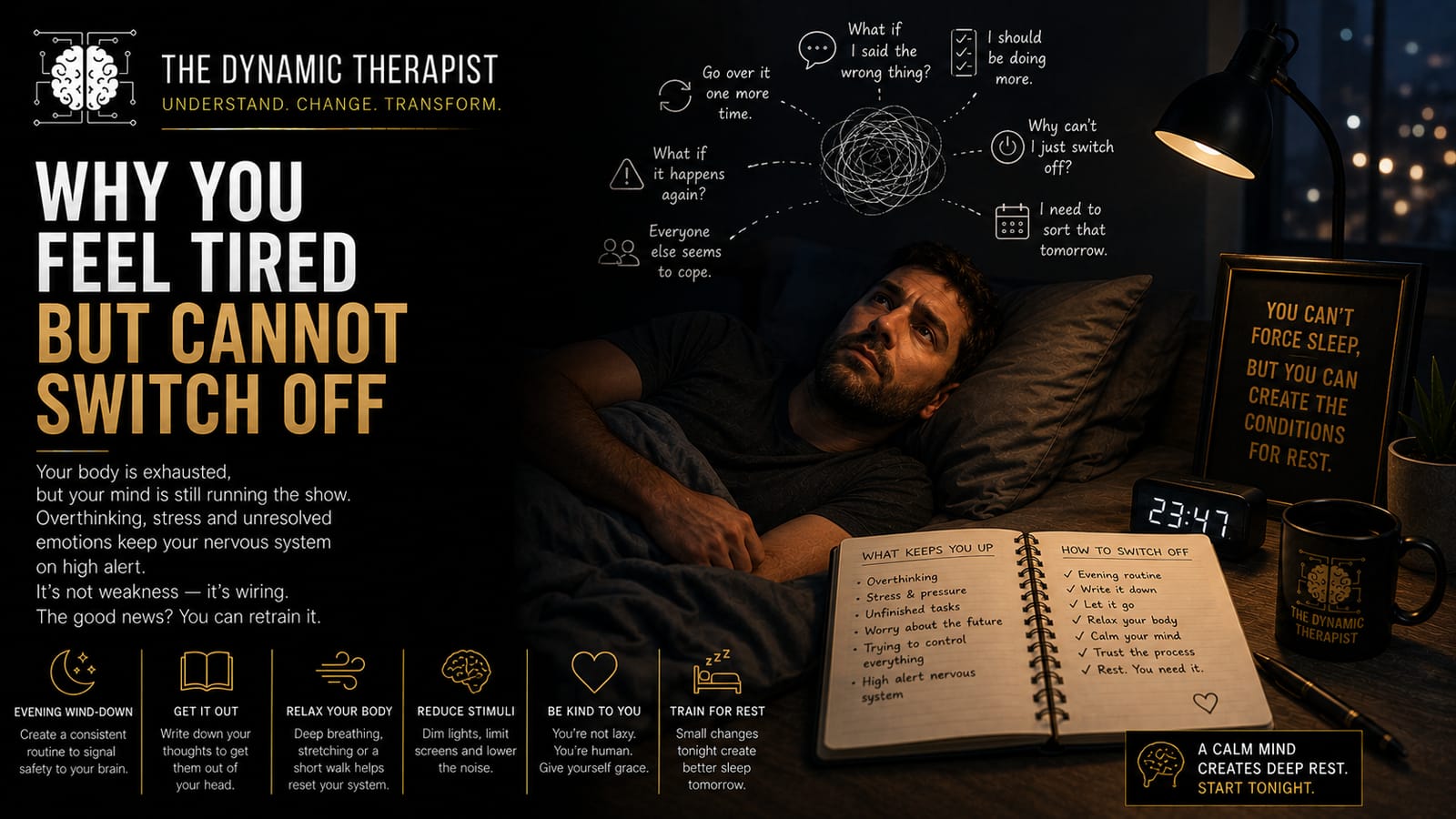
Chronic Stress is the most common driver. When the Stress system is habitually activated, it doesn't automatically deactivate when the day ends. The mind keeps processing, anticipating, preparing — even without a specific immediate threat.
Unfinished business compounds this.
Open loops — unresolved concerns, unmade decisions, things that need to happen tomorrow — keep the processing system engaged. The mind is working on them whether you want it to or not.
Caffeine, alcohol, screen stimulation and exercise close to bedtime can each maintain or increase arousal when the system is already sensitised. For people with Anxiety, the combination is particularly problematic.
What Helps
The most important thing is addressing the arousal system directly rather than waiting for the tiredness to override it. This means creating genuine signals of safety and completion:
A consistent wind-down routine that starts well before bedtime. Physical deactivation: gentle movement, progressive muscle relaxation or breathwork that directly downregulates the nervous system.
Offloading open loops: writing down the things that are circling before bed, with a brief plan for when they'll be addressed. Reducing stimulation in the 90 minutes before sleep. Addressing the underlying Stress rather than only managing the sleep symptom.
The Night-Time Audio Option
The Anxiety Reset System from The Dynamic Therapist includes a dedicated night-time audio session specifically designed to guide the nervous system from activation toward rest.
For people who find they can't switch off, a structured guided session can provide the external scaffolding the mind needs to let go. A free 30-minute consultation is also available to discuss a more personalised approach.
When to Speak to Your GP
If sleep difficulties are persistent, significantly affecting your daily functioning, or accompanied by other symptoms, please speak to your GP.
Underlying sleep disorders, Anxiety conditions and other health factors can all contribute and deserve proper assessment.
Key Takeaways
The tired-but-wired feeling happens when the arousal system overrides the sleep drive. Chronic Stress is the most common driver. Unfinished mental business keeps the processing system active. Addressing the arousal system directly is more effective than waiting for tiredness to win. Persistent sleep problems warrant medical assessment.
Ready to Actually Switch Off?
Book a free 30-minute consultation with The Dynamic Therapist, or explore the Anxiety Reset System's night-time audio session for structured support winding down.