Not Naivety. Targeting.
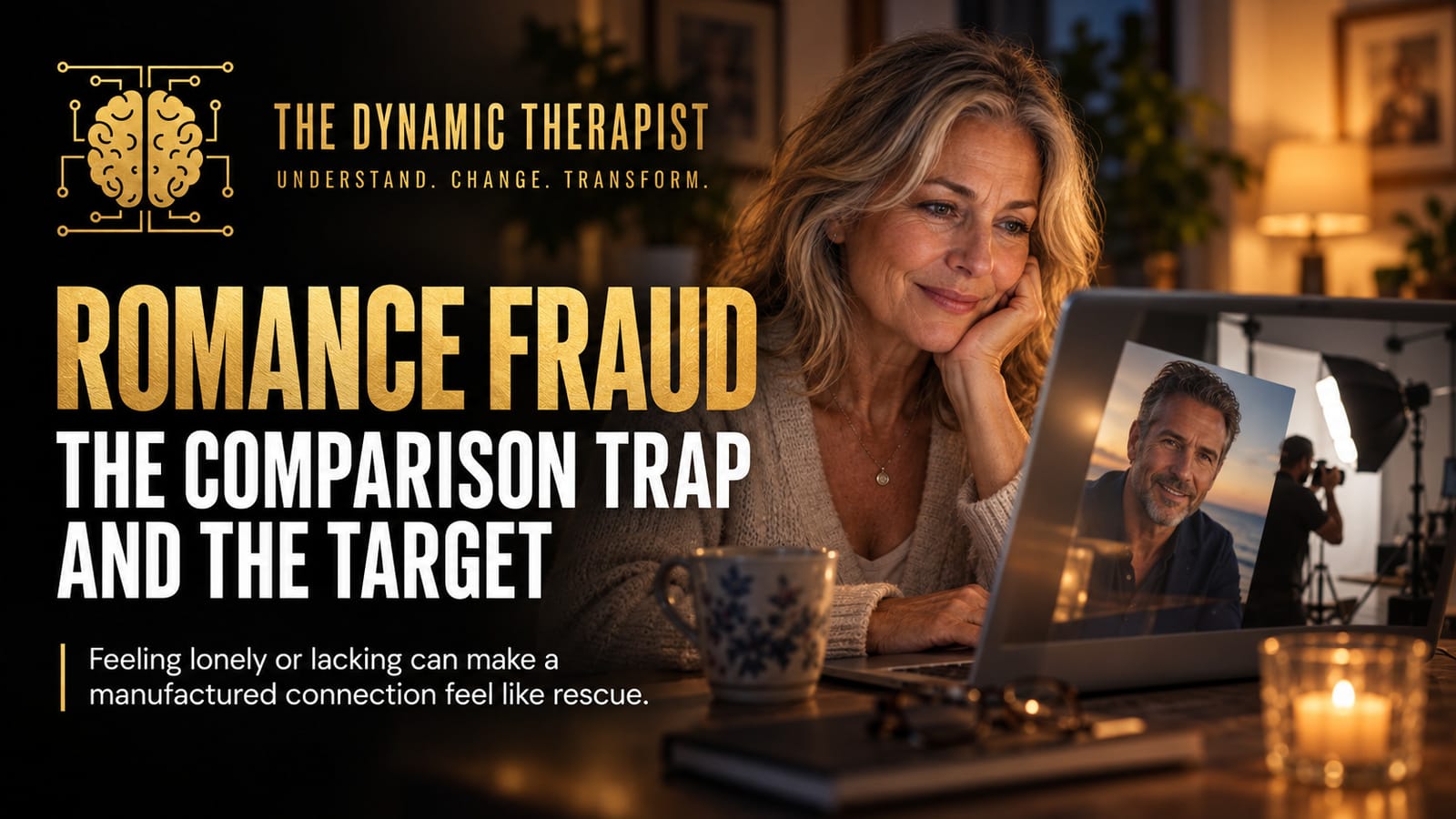
Romance fraud — the use of a fabricated romantic relationship to obtain money, information or other resources from the victim — is one of the most financially and emotionally damaging forms of fraud, and one of the most consistently misunderstood. The public narrative tends to frame victims as naive or gullible. The reality is considerably more specific and more uncomfortable.
Romance fraud victims are not primarily defined by low intelligence or poor critical thinking. They are defined by being in specific psychological states — states that are deliberately identified and targeted by the perpetrators, who are often sophisticated, organised and operating at scale. Understanding the targeting is more useful than the narrative of naivety, both for understanding the phenomenon and for recognising vulnerability in yourself or people you care about.
The States That Are Targeted
Loneliness and social isolation
The most consistently identified vulnerability factor in romance fraud is loneliness — the painful experience of insufficient connection that research identifies as one of the most significant threats to both mental and physical health. Loneliness is both increasingly prevalent — the UK government's loneliness strategy documented significant levels of chronic loneliness across the population — and increasingly poorly served by the environments people inhabit.
Social media provides a simulacrum of connection that does not resolve loneliness and in many cases amplifies it — by making visible other people's apparently rich social lives while providing only the shallow connection of likes and comments. The person who is chronically lonely and spending significant time on social media is in a specific state of need — and that state of need is identifiable to people looking for it.
Low Self-Worth and inadequacy
The comparison trap described throughout this month creates a specific vulnerability: the person who consistently feels they are not enough — not attractive enough, not successful enough, not interesting enough — is more susceptible to someone who tells them they are exceptional. The love bombing dynamic described in the toxic relationships content from October — overwhelming early attention, declarations of deep feeling, the experience of being seen and chosen — is powerful precisely because it meets a genuine, unmet need for being valued.
Recent loss or transition
Bereavement, divorce, redundancy, retirement — life transitions that involve significant loss of role, identity or connection create windows of heightened vulnerability. The person recently widowed who is learning to navigate social life alone, the person recently divorced who is adjusting to a changed identity, the person who has just retired and lost the structure and social connection that work provided — these are specifically sought out.
How the Targeting Works
Romance fraud perpetrators do not wait for vulnerable people to find them. They actively search for them — on dating platforms, social media, bereavement groups, retirement forums, anywhere that people in vulnerable states congregate and self-identify. The profile information that people share publicly provides the data needed for targeting: relationship status, recent life events, apparent loneliness, expressions of self-doubt.
Once identified, the approach is calculated. The early interaction is calibrated to the specific person — their interests, their stated needs, their apparent vulnerabilities. The love bombing is tailored. The persona is constructed to match what the target is most likely to respond to. This is not improvisation. At the organised end of romance fraud, it is a systematic, scripted process applied to multiple targets simultaneously.
The Connection to the Comparison Trap
The comparison trap described in the first two weeks of this month creates the conditions for romance fraud vulnerability through a specific pathway. Chronic upward comparison produces chronic awareness of the gap between your life and the aspirational standard. One dimension of that gap is relational — the apparently rich, fulfilling romantic and social lives visible on your feed compared to your actual experience of connection.
The person who has spent months or years in a comparison environment that consistently implies their relational life is insufficient is in a state of acute relational need. That need is exactly what romance fraud perpetrators offer to satisfy — intensely, immediately and unconditionally. The speed and intensity of the attention is the feature, not the bug. It meets a genuine need that has been made acute by the comparison environment.
Three Reflection Questions
- Are there areas of your life — relational, financial, professional — where the gap between your current situation and the aspirational standard has become acute enough to produce significant distress?
- Have you experienced approaches online that felt exceptionally attuned to your specific needs or vulnerabilities — and how did you respond?
- Is there someone in your life who might be in a state of heightened vulnerability — loneliness, recent loss, low Self-Worth — who you could check in with?
Key Takeaways
- Romance fraud victims are not primarily naive — they are in specific psychological states that are deliberately identified and targeted.
- The targeted states include loneliness, low Self-Worth, recent loss and the relational dissatisfaction produced by chronic comparison.
- Perpetrators actively search for vulnerable people rather than waiting to be found.
- The love bombing dynamic meets a genuine, acute need — which is what makes it effective.
- The comparison trap creates and maintains the relational need that romance fraud offers to satisfy.
Frequently Asked Questions
Can this happen to anyone?
Yes, in principle. The states that increase vulnerability — loneliness, recent loss, low Self-Worth — are human experiences that most people encounter at some point. The question is the degree of vulnerability at any given moment and the presence of protective factors.
What are the protective factors?
Strong existing social connections, secure Self-Esteem, awareness of the targeting mechanism, and trusted people who can provide an outside perspective on new relationships are the most consistent protective factors.
How do I know if a new online relationship is genuine?
Key indicators of potential fraud include: the relationship moving very quickly to intense emotional commitment; reluctance to meet in person or video call; inconsistencies in the person's story; requests for money, gifts or financial information; and a narrative of exceptional circumstances that prevent normal meeting. None of these are conclusive individually, but their combination is significant.
What if I think I am already in this situation?
Contact Action Fraud (0300 123 2040) for advice. Do not send money or information. Talk to someone you trust outside the online relationship. Take time before making any financial decisions regardless of the urgency being created.
Can Simon help with the underlying vulnerability?
Yes. Addressing the loneliness, low Self-Worth and relational dissatisfaction that create vulnerability is directly relevant to the therapeutic and coaching work.
The Need Was Real. The Person Offering to Meet It Was Not.
The loneliness, the desire for connection, the hope of being genuinely seen and chosen — these are real and legitimate human needs. The fraud exploits the need, not the person. Understanding that changes the story from one of personal failing to one of targeted exploitation of a genuine vulnerability. That distinction matters for recovery.
Simon Taylor works with people dealing with the aftermath of romantic fraud and the underlying vulnerabilities that enabled it. A Free 30-Minute Consultation is a good place to start.
Book Your Free 30-Minute Consultation | Get The Little Book of Big Changes